Re:Claim
Technologies: HTML, CSS, JavaScript, PHP, Docker, GitHub Actions
Tags: Project Management, Scrum, Lost and Found System
- Decentralized Chaos - College Student Councils relied on manual Facebook Messenger broadcasts, resulting in cluttered message threads where items were quickly buried and forgotten.
- Inaccessible Formal Channels - while the General Services Office (GSO) offered a formal sign-up process, their office was located in an inaccessible part of the campus, and many students were unaware they even handled lost items.
- Empirical Validation - a comprehensive survey of 70 WVSU students revealed that 64 respondents had experienced losing an item on campus, with many expressing deep uncertainty, citing unreturned items lingering for years and a complete lack of a centralized tracking mechanism
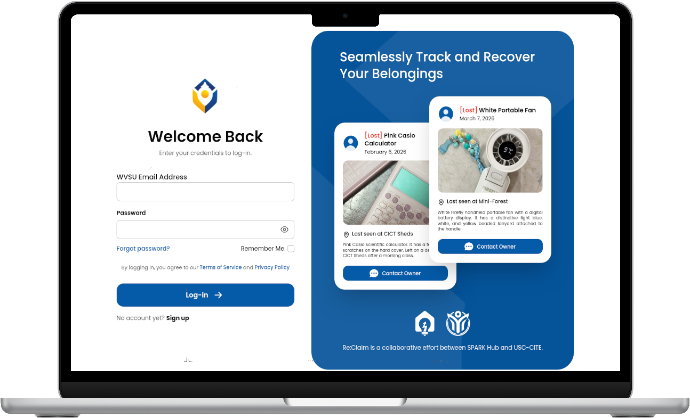
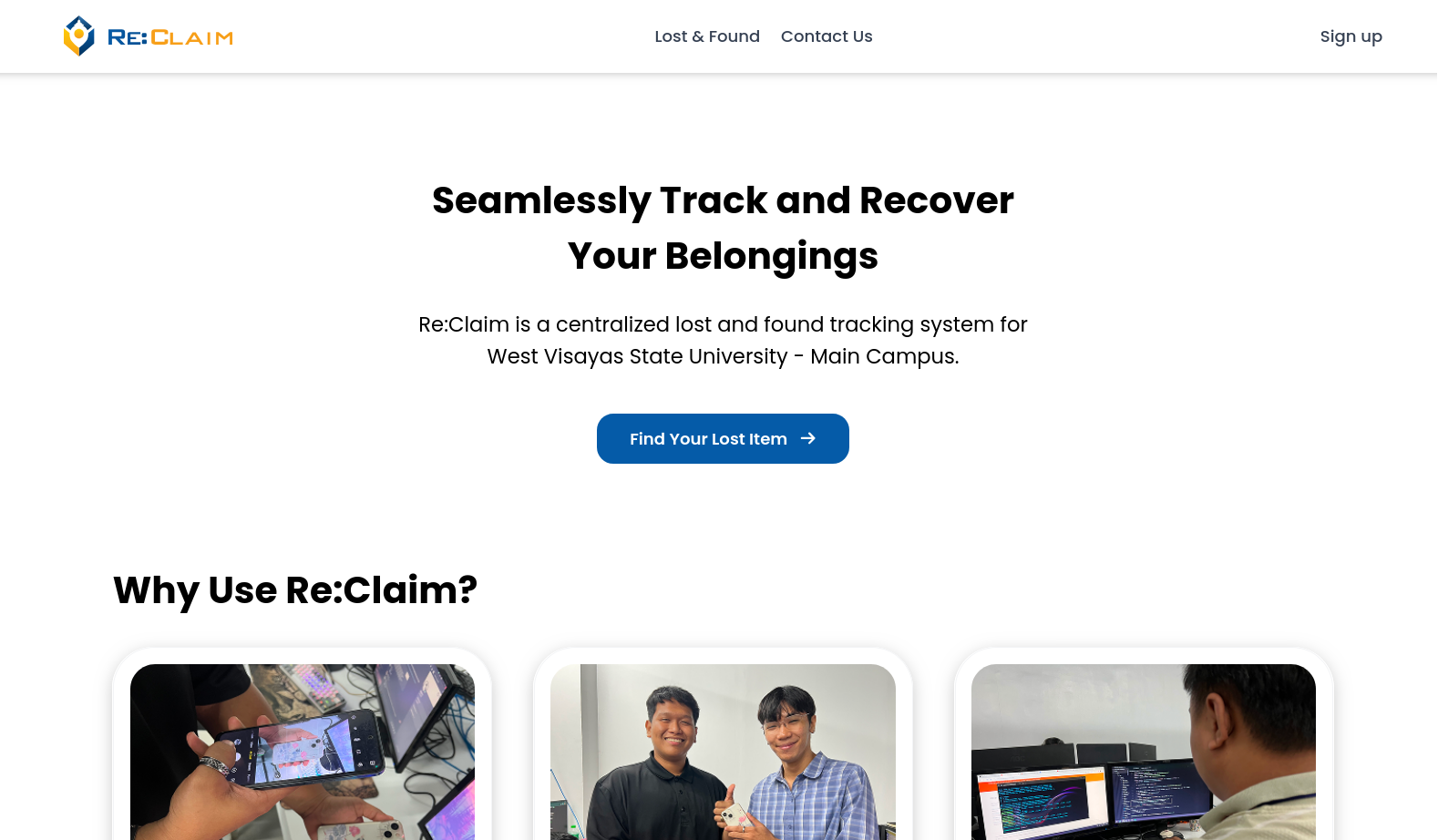
As the Technical Lead, with John Manuel Carado as the Project Manager, Re:Claim was developed to solve campus-wide information fragmentation by centralizing lost-and-found reporting into a single, accessible platform.
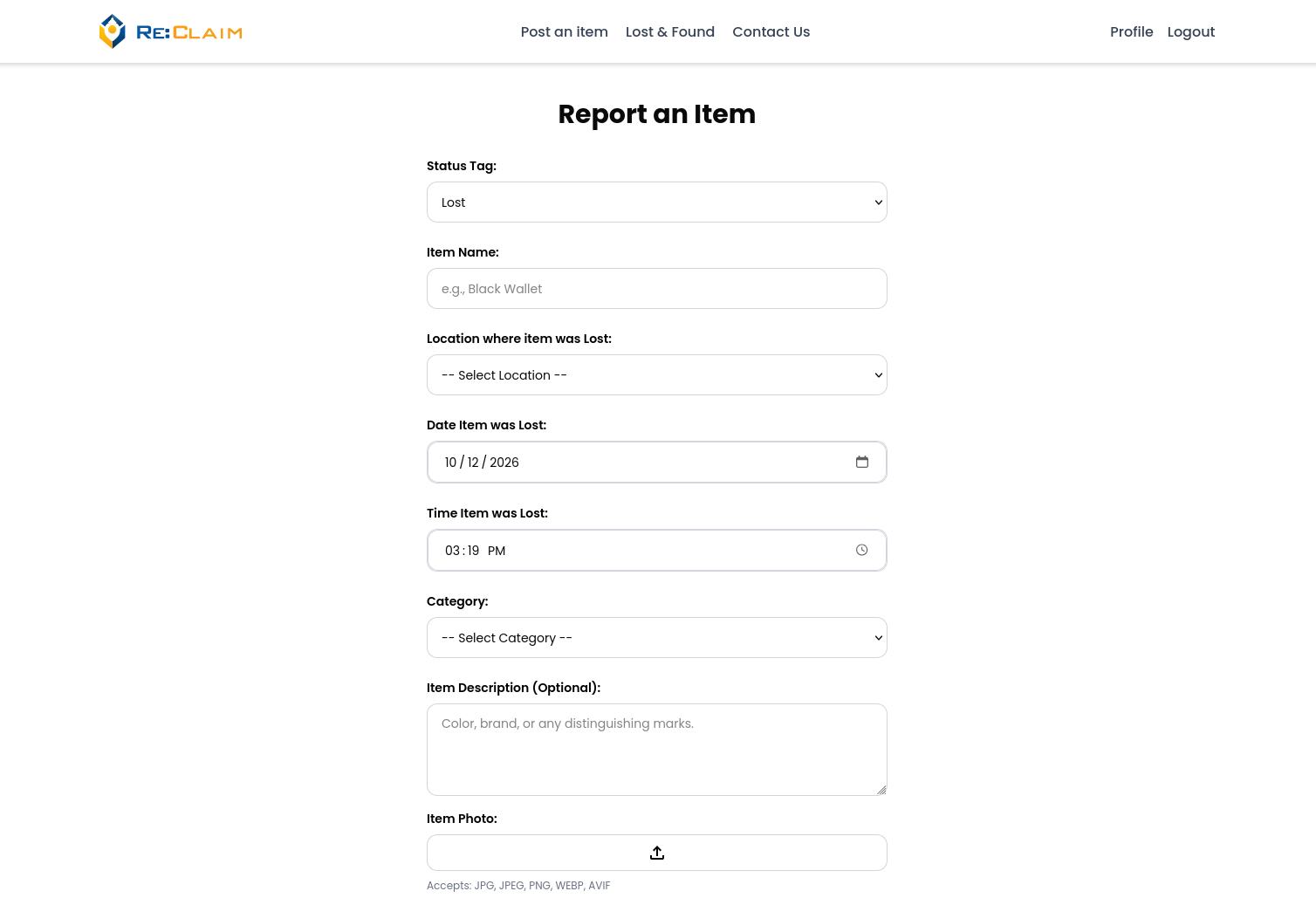
- Unified Digital Registry - allows students to instantly log lost or found items with detailed descriptions and images, eliminating reliance on messy Messenger chats.
- Campus-Wide Accessibility - bridges the gap between disparate college councils, providing an intuitive hub accessible to all WVSU students regardless of department.
- Transparent Community Recovery - streamlines matching and retrieval so students can check item statuses anytime without guesswork.
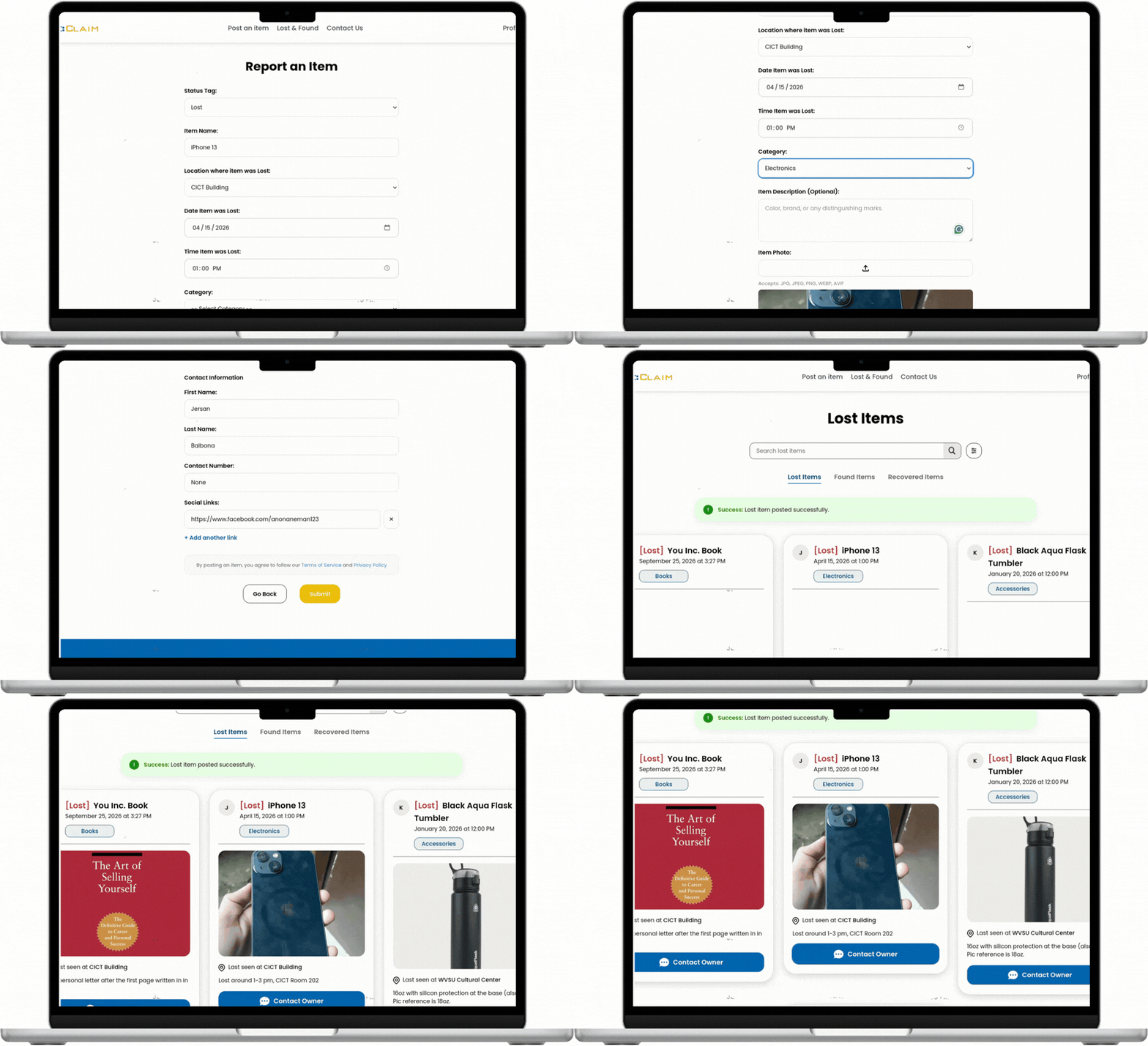
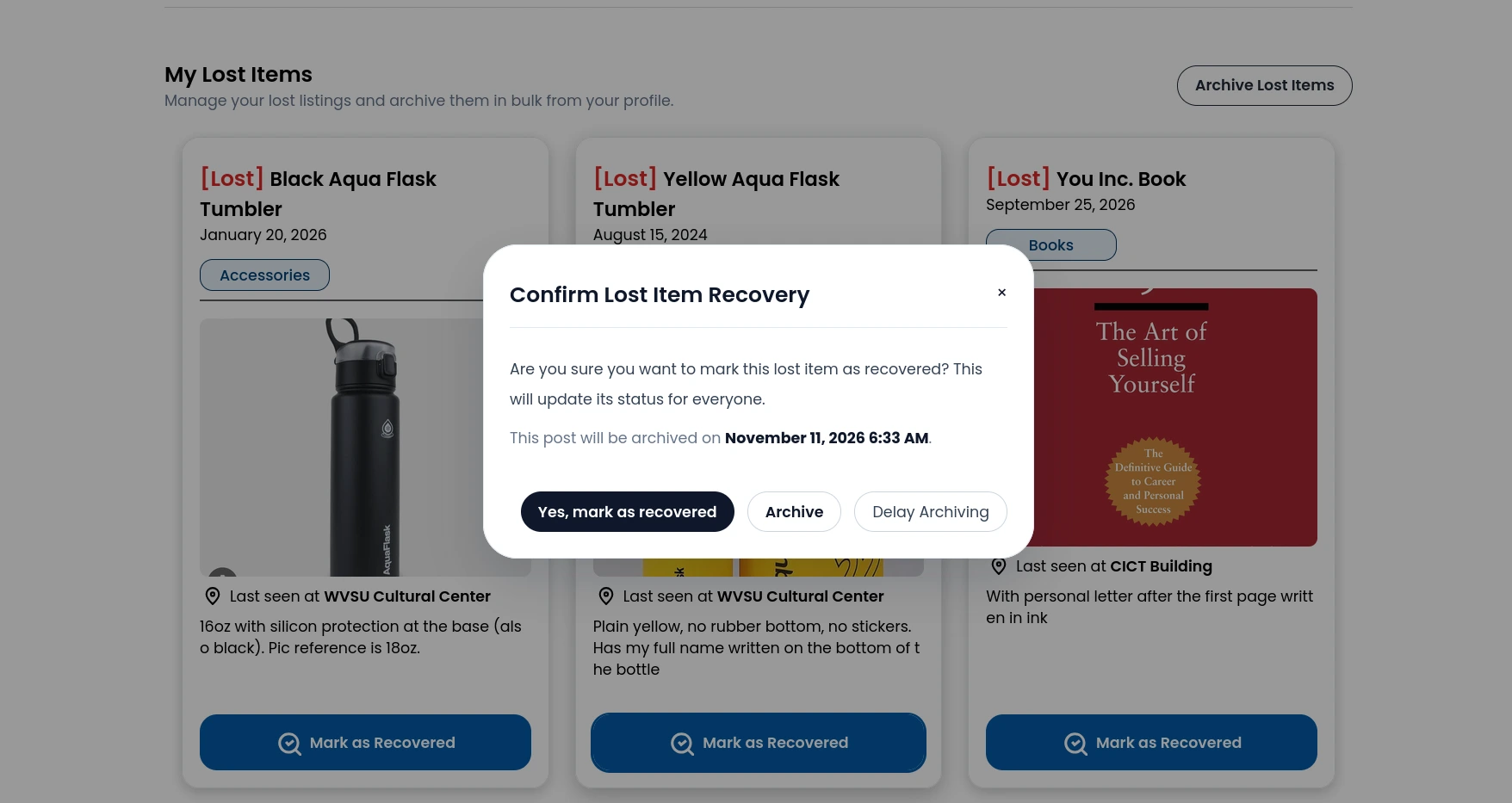
Technical & Leadership Highlights
Project Management & Scrum Execution - orchestrated cross-functional design and development teams from SPARK Hub and USC-CITE through structured weekly stand-ups, rigorous quality assurance, and clear accountability.
User-Centric Architecture - translated qualitative and quantitative survey insights into core product requirements, ensuring the platform directly addressed student pain points around searchability and trust.
Cross-Org Collaboration - supervised development workflows involving up to 10 students composed of developers and designers, establishing a sustainable hand-off and open-source contribution model on GitHub.