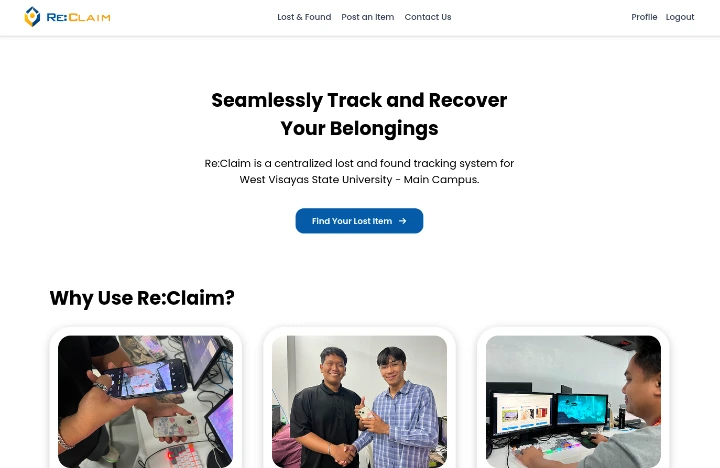
Products, discoveries, and innovations are never solely made by one individual. It is the fruit of collaboration. Ideas passed down from generations and waiting until the circumstances are almost perfect to boldly execute them.
The idea of Re:Claim was communicated to me between October and November last year. I recall Manuel had the idea to create a new system where lost and found items are centralized for online access and dissemination. I was intrigued but hesitant at first because I was at the cusp of deciding where to conduct my internship.
When December came, I finally decided to be part of the project's technical team. The decision was made for two key reasons: 1) to end my university service with positive impact and 2) to collaborate with my fellow juniors one last time before graduation.
The project started with an online survey and, after closing, we collected a total of 70 student responses. The sentiments mainly lean towards frustration and uncertainty. If you had lost a valuable item, such as a tumbler, wallet, or piece of clothing, chances are that it might not return. While current systems rely on disseminating information about lost and found items via social media, one channel alone wasn't enough to instigate action.
After processing our data, we proceeded to write both the project and software requirements. Manuel focused on the system's utilization and purpose while I specified its expected functions and behaviors. We took turns to review and ensure our expectations are clearly aligned. After much revision, it was ready to be implemented, albeit with a few minor, missing details.
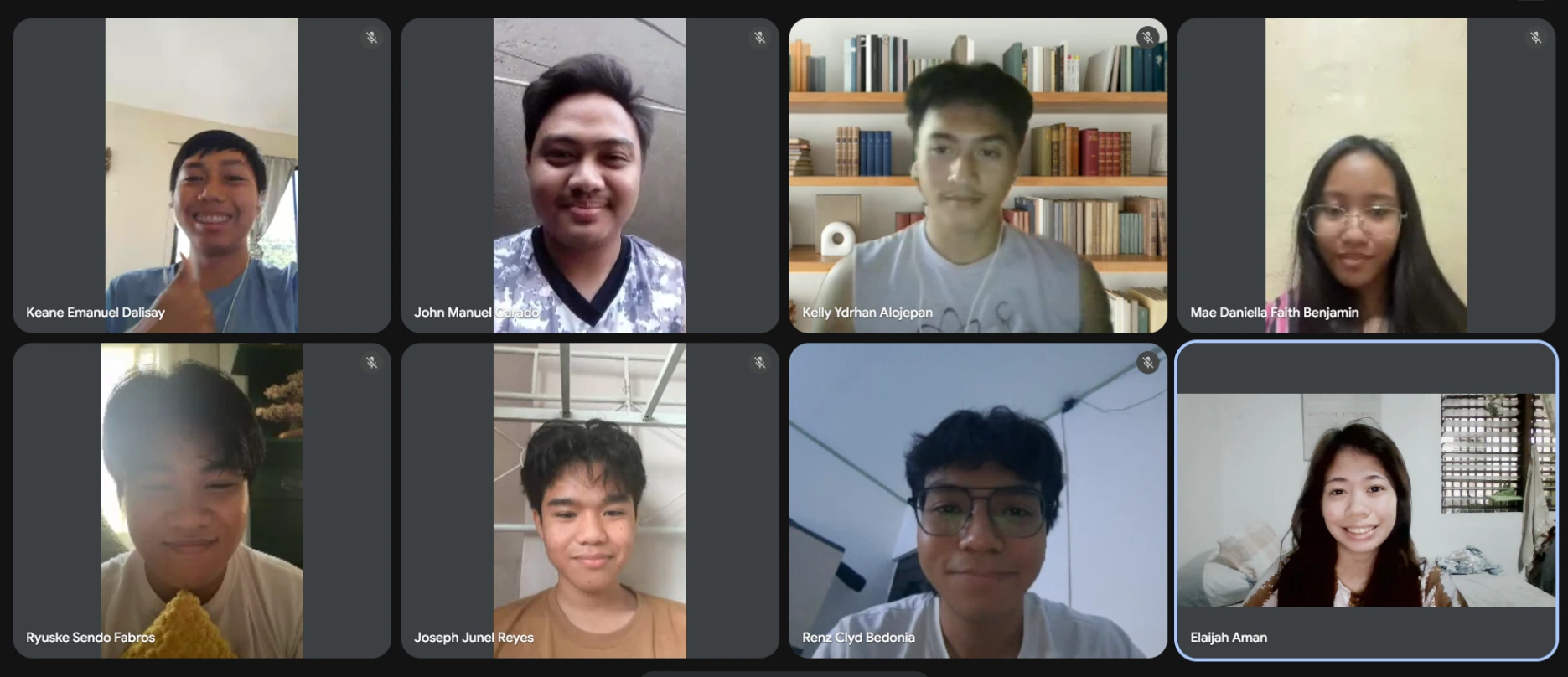
The development team comprised of 2 designers and 3 developers. Manuel and I acted as the project's product managers. We followed Scrum, an agile methodology, to execute the work. I personally chose it to experiment with our work dynamics and get comfortable at doing weekly stand-ups. Thankfully, we also do it at my company and that helped me to adjust what works best for the team.
Between January to April, our designers and developers worked tirelessly to deliver the system. Most even stay up late till midnight. Academics and organizational activities are not easy to juggle especially when there are big projects due. We had to delay the deployment twice to give ourselves more leeway.
Good things did come about while contributing to the project. I'm now more assertive. I always ensure pull requests are done with the quality I expect (although I can't avoid rushing them all together because of time constraints). I tend to leave comments on what's missing and what to improve. At times, I was dumbfounded with a few parts of the codebase because of the complexity. But at the same time, I was very glad and impressed at how our developers created the framework from the ground up with my guidance. The same is true for our designers who had poured much effort into making it as usable and appealing as possible.
What comes after, you ask? Making the system open-source is by choice: to ensure the software lives and is maintained by students for generations to come. You can contribute yourself after reading this. Open-source software lives when its collaborators proactively participate in its upkeep. Without participation, it slowly fades into abandonment.
Re:Claim your passion. Start contributing to help people find their lost items faster and make them happy.